

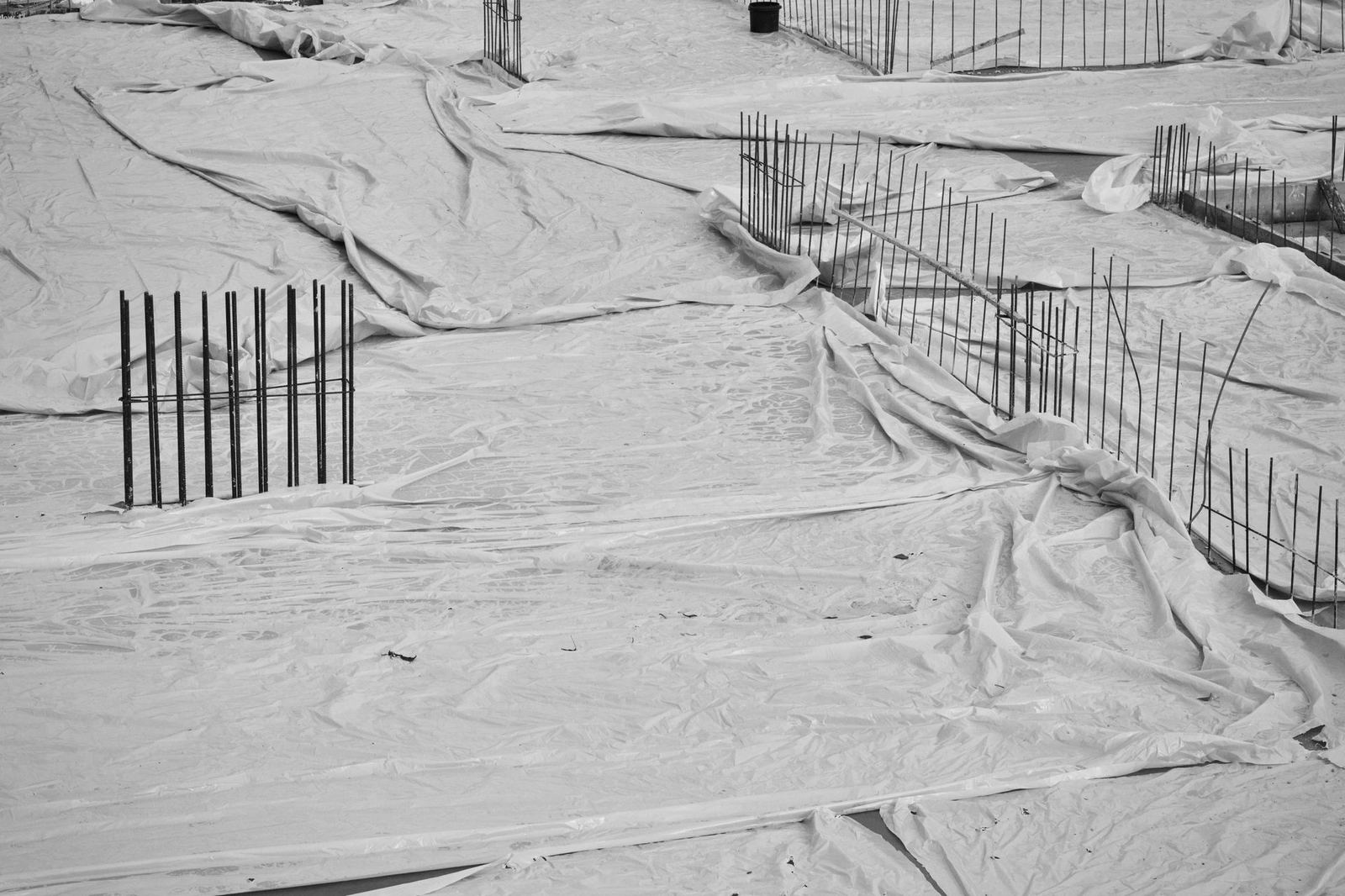
A comparison of the two foundation systems in terms of ground survey, bearing capacity and cost.
The choice of foundation type is the first engineering decision that directly determines the safety and cost of a structure. The choice between a raft and a piled foundation mostly depends on ground survey results and structural loads.
Why is a ground survey necessary?
Through boreholes, field tests and laboratory analyses, the ground's bearing capacity, settlement behaviour, groundwater level and liquefaction potential are determined. Designing a foundation without a survey is a serious risk for both safety and cost.
When is a raft foundation suitable?
When the ground has sufficient bearing capacity and settlements are limited, a raft slab covering the whole underside of the building spreads loads over a wide area. In medium-rise buildings and good ground it is both economical and fast. Raft thickness is typically 60 – 120 cm and requires heavy reinforcement.
When is a piled foundation needed?
Where the upper ground is weak, liquefiable or highly compressible, the groundwater is high and building loads are heavy, a piled foundation transferring the load to a firm deep layer is preferred. Pile diameter is typically 60 – 120 cm and length 12 – 40 metres. Cost is noticeably higher than a raft, but settlement and earthquake behaviour are more reliable.
Cost comparison
For the same building, a piled foundation can increase total construction cost by about 5 – 12% compared with a raft. You can see this difference by selecting the 'weak ground' option in our calculator.
Quality of execution
In both systems, concrete quality (C30/37 or higher), cover and rebar placement are critical. Integrity tests (sonic method) and load tests should be done on piles to verify the design.
This article is general information; a building's foundation system should be determined by an authorised structural design engineer according to the ground survey.
Try it with our calculator
In our construction cost calculator you can see the difference by changing the ground condition between 'good' and 'weak'. The raft concrete and rebar quantity tool also gives the slab's volume and material cost quickly for pre-feasibility.
Common mistakes
Limiting the ground survey to only a few boreholes, ignoring seasonal variation of groundwater and overlooking the effect of neighbouring plot excavation are the most frequent mistakes. The number and depth of boreholes should therefore be set according to building size and ground variability.